Pribram.eu Městský úřad Odbory MěÚ Odbor životního prostředí Ochrana přírody How to feed waterbirds properly
Od. život. pr. Ochrana příro. Jak spr. kr..
How to feed waterfowl properly
Feeding Waterfowl Properly: How to Help, Not Harm
Feeding ducks, swans and other waterbirds is a popular activity, but one that can have unexpectedly negative consequences. Many people do not realise that feeding birds bread and other baked goods not only harms them but also disrupts entire aquatic ecosystems. An inappropriate diet can cause health problems, bacterial overgrowth and pollution of water bodies. So how can you help birds in the right way? Here we bring you useful information and tips on how to feed waterbirds in a healthy and environmentally responsible way.
Why bread is harmful
We often associate bread with feeding waterbirds because it is an easily accessible and commonly used food. However, bread is a completely unsuitable food source for birds. Whilst it is an easy source of energy, it contains no nutrients, vitamins or minerals. This is a particular problem for young birds, as an insufficient intake of nutrients and minerals leads to improper development of bones and joints and has a detrimental effect on these birds’ future health. It is therefore essential to break this ingrained habit and replace it with healthier alternatives that will genuinely benefit the birds.
How should waterfowl be fed properly?
- Supplementary feeding is most appropriate only during the winter months, particularly during prolonged periods of frost, when birds have limited access to natural food. For the rest of the year, we should allow birds to forage for food naturally.
- The food we offer birds should be in its natural state. We must definitely avoid spicy, salted or smoked foods. We should also avoid mouldy or spoiled food.
- The most suitable foods are staple grains: maize, wheat, rye, oats and other cereals.
- Birds will also enjoy birdseed, or vegetable trimmings and peelings.
Feed sensibly
When feeding waterbirds, it is important to consider what is actually good for them. Human food, such as bread or leftovers, has no place in their diet – not only does it fail to provide the necessary nutrients, but it can also seriously harm them. Uneaten food pollutes the aquatic environment and causes bacteria to multiply. All of this results in the spread of diseases, from which the birds then die. Let’s not forget that by feeding them, we’re also feeding rats, which then linger in the vicinity and can also carry dangerous diseases. It’s wonderful that people want to help birds, but by feeding them incorrectly, they often unwittingly do them more harm than good. If we do decide to feed birds, we should do so responsibly, taking into account their actual needs and the health of the natural environment.
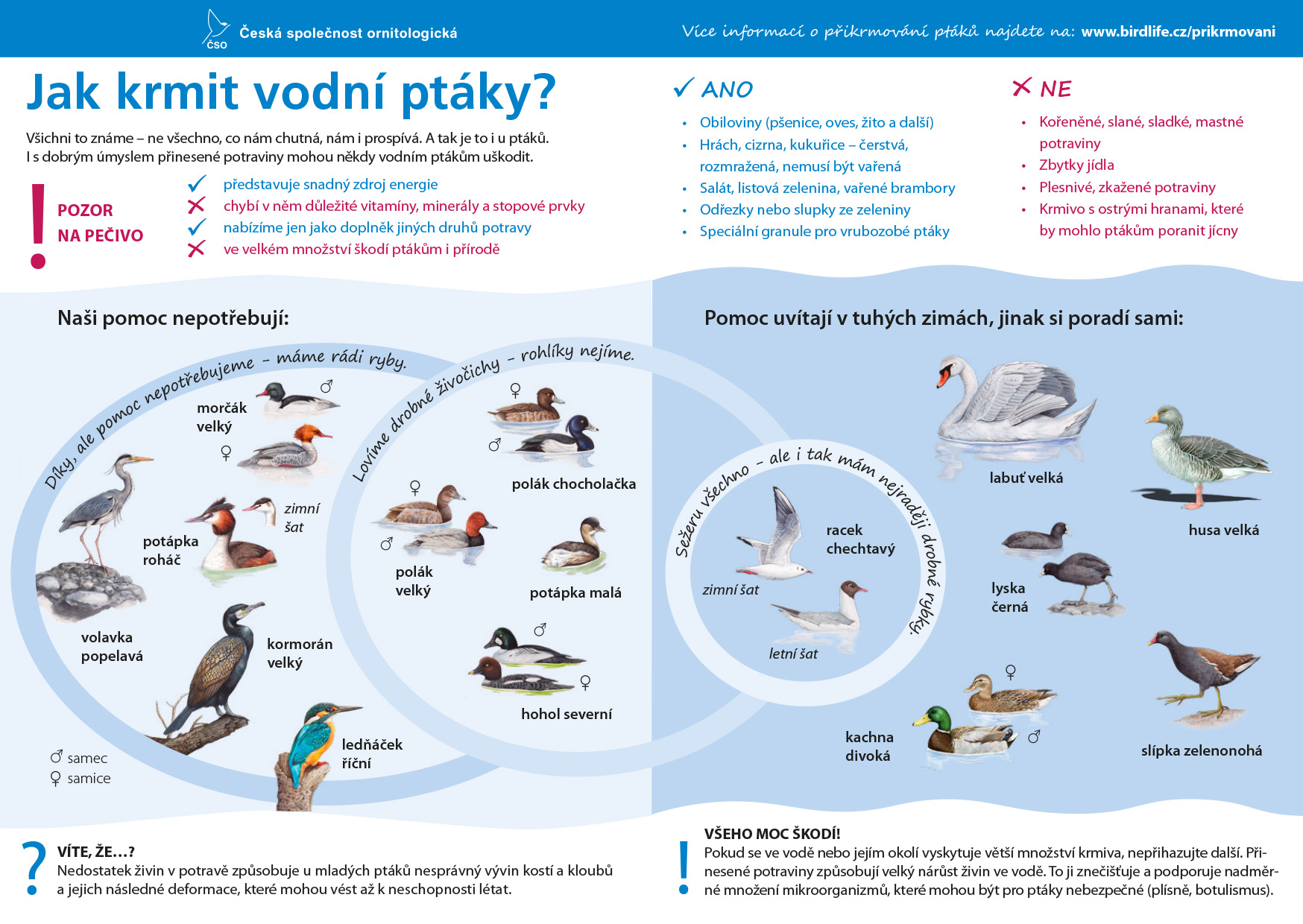
(Image source: ČSO – Czech Ornithological Society; the material is licensed under Creative Commons BY-NC-SA 4.0.)
Updated: 20. 1. 2025 v 14:29:11

